

Select your region:

Pneumatic Torque Wrench

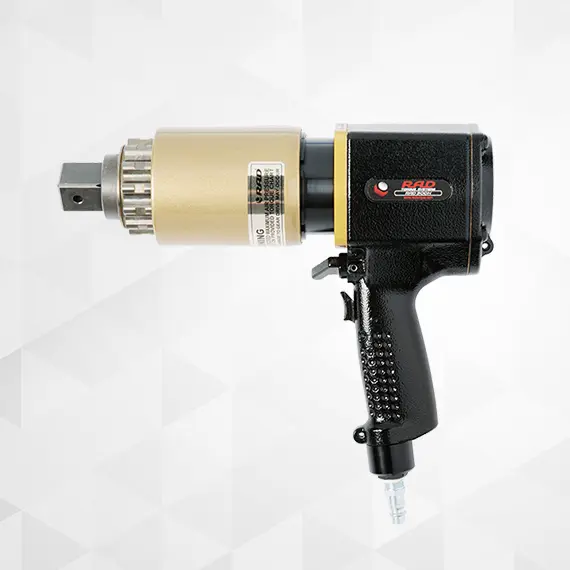
RAD Single Speed

The RAD single-speed torque wrenches are designed to tackle heavy-duty applications with comfort and ease. With eleven models available, ranging from 70-15,000 Nm (50 ft/lbs to 11,000 ft/lbs), you can count on these pneumatic torque wrenches to deliver the precise torque you need. Crafted from 20 years of engineering and design experience, these tools are built to meet your toughest challenges.
Description
RAD Single Speed Pneumatic Torque Wrench: Built for Power and Precision

The RAD Single Speed pneumatic torque wrench is engineered as a true workhorse, capable of handling the toughest bolting applications with unmatched reliability. Featuring advanced planetary gearboxes, it delivers an exceptional power-to-weight ratio, making it ideal for heavy-duty industrial environments.

Unlike conventional impact tools, the RAD Single Speed applies torque smoothly and continuously, ensuring controlled tightening, preventing fastener damage, and guaranteeing superior accuracy in every operation.

Key Features
  • Unmatched Power: High-efficiency planetary gear system delivers maximum torque output with minimal weight.
  • Smooth, Controlled Torque Application: Eliminates impact blows for safer and more precise tightening.
  • Ergonomic Lightweight Design: Pistol-grip handle reduces operator fatigue and enhances comfort during long operations.
  • Fast & Easy Operation: Set the torque and get started instantly—no setup delays.
  • Reliable Performance: RAD pneumatic tools are known for durability, minimizing downtime and improving productivity.
What’s Included
  • Reaction arm and snap ring
  • Hose and fittings
  • Tool holder with FRL unit (Filter, Regulator, Lubricator)
  • Operator’s manual
  • Calibration certificate traceable to ISO 17025 standards
  • Safety instructions on USB flash drive
Industries
  • Wind Energy
  • Oil & Gas
  • Manufacturing
  • Mining & Heavy Machinery
  • Steel Plants
  • Construction
  • Shipbuilding & Marine
  • Railway Maintenance
  • Power Generation
Applications
  • Heavy-duty bolting in wind turbine assembly and maintenance.
  • Precise tightening of structural components in construction and infrastructure projects.
  • Fastener tightening in mining, heavy machinery, and manufacturing setups.
  • Maintenance of critical components in power plants and industrial facilities.
  • Controlled torque applications for shipbuilding and marine engineering.

Experience the perfect blend of power, precision, and long-lasting performance with the RAD Single Speed Pneumatic Torque Wrench—your trusted partner for demanding industrial bolting operations.

After Sales Support

Our team is always available to assist you with technical queries or product support. Contact us at +91-828282-9795 or email marketing@absgroup.in.

Reach out today—we’re here to help you achieve safer, faster, and more efficient bolting performance.

Specifications

  • Maximum Torque (Nm) / (ft-lbs) 15000 / 11000
  • Minimum Torque (Nm) / (ft-lbs) 70 / 50
  • Maximum Weight (kg) / (lbs) 18.9 / 42
  • Minimum Weight (kg) / (lbs) 2.7 / 6

Technical Data

RAD Single Speed Pneumatic Torque Wrench — Technical Specifications
Metric Models
TOOL MODEL TORQUE RANGE RPM
RAD 475SL 70–475 Nm 65
RAD 10GX 150–950 Nm 30
RAD 14GX 275–1400 Nm 20
RAD 20DX 400–2000 Nm 10
RAD 34GX 700–3400 Nm 9
RAD 40DX 1200–4000 Nm 8
RAD *46GX 1400–4600 Nm 12
RAD 70DX 2000–7000 Nm 6.7
RAD 80DX 2700–8000 Nm 6.6
RAD 110DX 3400–11000 Nm 4
RAD 150DX 5500–15000 Nm 3
Imperial Models
TOOL MODEL TORQUE RANGE RPM
RAD 350SL 50–350 ft/lbs 65
7GX 100–700 ft/lbs 30
10GX 200–1000 ft/lbs 20
15DX 300–1500 ft/lbs 10
25GX 500–2500 ft/lbs 9
30DX 900–3000 ft/lbs 8
*34GX 1000–3400 ft/lbs 12
50DX 1500–5000 ft/lbs 6.7
60DX 2000–6000 ft/lbs 6.6
80DX 2500–8000 ft/lbs 4
110DX 4000–11000 ft/lbs 3

Enquire Now

Let's discuss further to get better results

Didn't find the answer you were looking for? Please
ask to our customer service department.

Information

Frequently Asked
Questions

You will find answers to about our various industries and industry specialists service and more. Please feel
free to contact us if you don't get your question's answer in below.

A pneumatic torque wrench operates on the principle of compressed air energy. Here's how it works- Compressed Air Supply: Air is supplied to the wrench through an air compressor. Motor Activation: The air drives a motor, which generates rotational force. Gear Mechanism: The force is transmitted through a gear reduction system to increase torque output. Torque Control: The tool allows the user to set a precise torque value, and the wrench automatically stops or disengages when the desired torque is achieved. This design provides consistent and controlled torque application, making it ideal for high-precision tasks.

The primary advantage of a pneumatic torque wrench is its ability to deliver high torque output with precision and consistency, even in industrial applications. Other key benefits include: Continuous Operation: Suitable for prolonged use without overheating. Lightweight Design: Easier to handle compared to hydraulic tools. Safety: Reduces operator fatigue and minimizes the risk of over-tightening. Efficiency: Speeds up bolting tasks with minimal physical effort.

Torque wrenches have the following limitations: Calibration Dependency: They require regular calibration to maintain accuracy. Limited Range: Each wrench has a specific torque range, and using it beyond this can damage the tool or affect accuracy. Operator Dependency: Improper use, such as applying additional force after the ""click"" on a mechanical torque wrench, can result in over-tightening. Cost: Advanced digital or pneumatic models can be expensive.

A fundamental rule is to never exceed the torque wrench's specified range. Additional guidelines include: Set the Correct Torque: Always adjust the wrench to the required torque value for the application. Use Smooth Motion: Apply torque in a steady and even manner. Avoid Misuse: Do not use the wrench as a breaker bar or hammer. Store Properly: Reset the wrench to its lowest setting after use to avoid spring tension damage in mechanical models.
call to abs group